Archive for the ‘History of the OU’ Category

Happy birthday, University of Sussex

Friday, November 4th, 2011
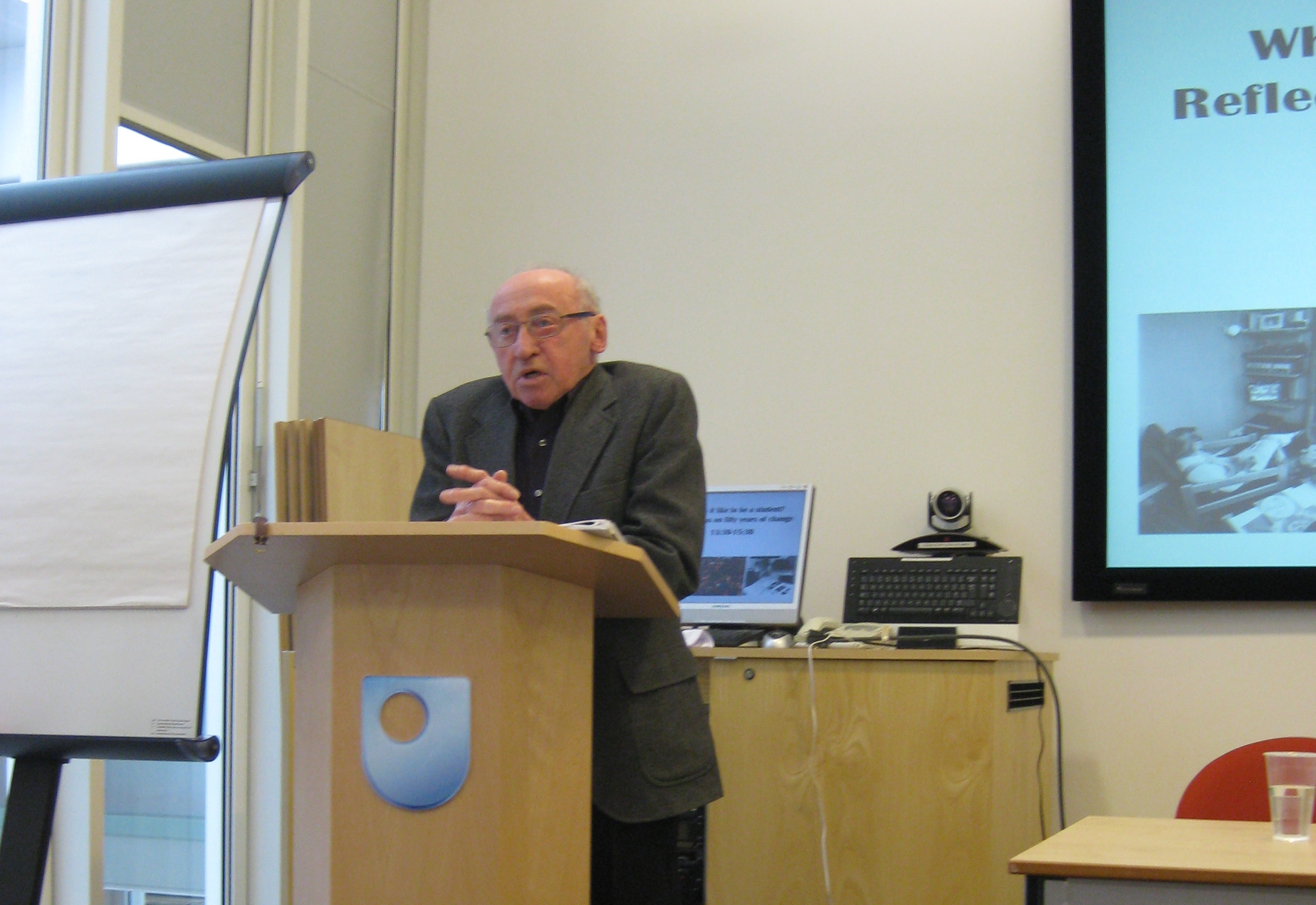
Fred Gray (a speaker on the 29th November forum) has edited a new book, ‘Making the future. A history of the University of Sussex’. This beautifully-illustrated account of the first fifty years of the university (1961-2011) consists of chapters by almost 70 different authors. Here are the voices, and the varied and well-presented images, of former and current staff and students. Their narratives are framed by Fred Gray’s introductions his overview and his account of continuing education (the field in which he became a professor).  

The theme of the liberalism of the sixties and seventies runs through the book as does the engagement with the distinctive and original curriculum. There are some parallels to be made with the OU, the influence of Asa Briggs on both places being one of them and the ‘early leavers’ scheme is another. One might also compare it to the University of Twente (founded 1961 as the first campus university in the Netherlands it insisted that engineers study social sciences) and it also influenced Kent, Lancaster, UEA, Stirling, Essex, York and Warwick.  (more…)

Happy 75th birthday BBC

Thursday, November 3rd, 2011

The History of the OU project would like to wish the BBC a happy 75th birthday – for over half its life, and for the entirety of the OU’s existence, there has been a strong partnership between the two organisations which continues to this day.

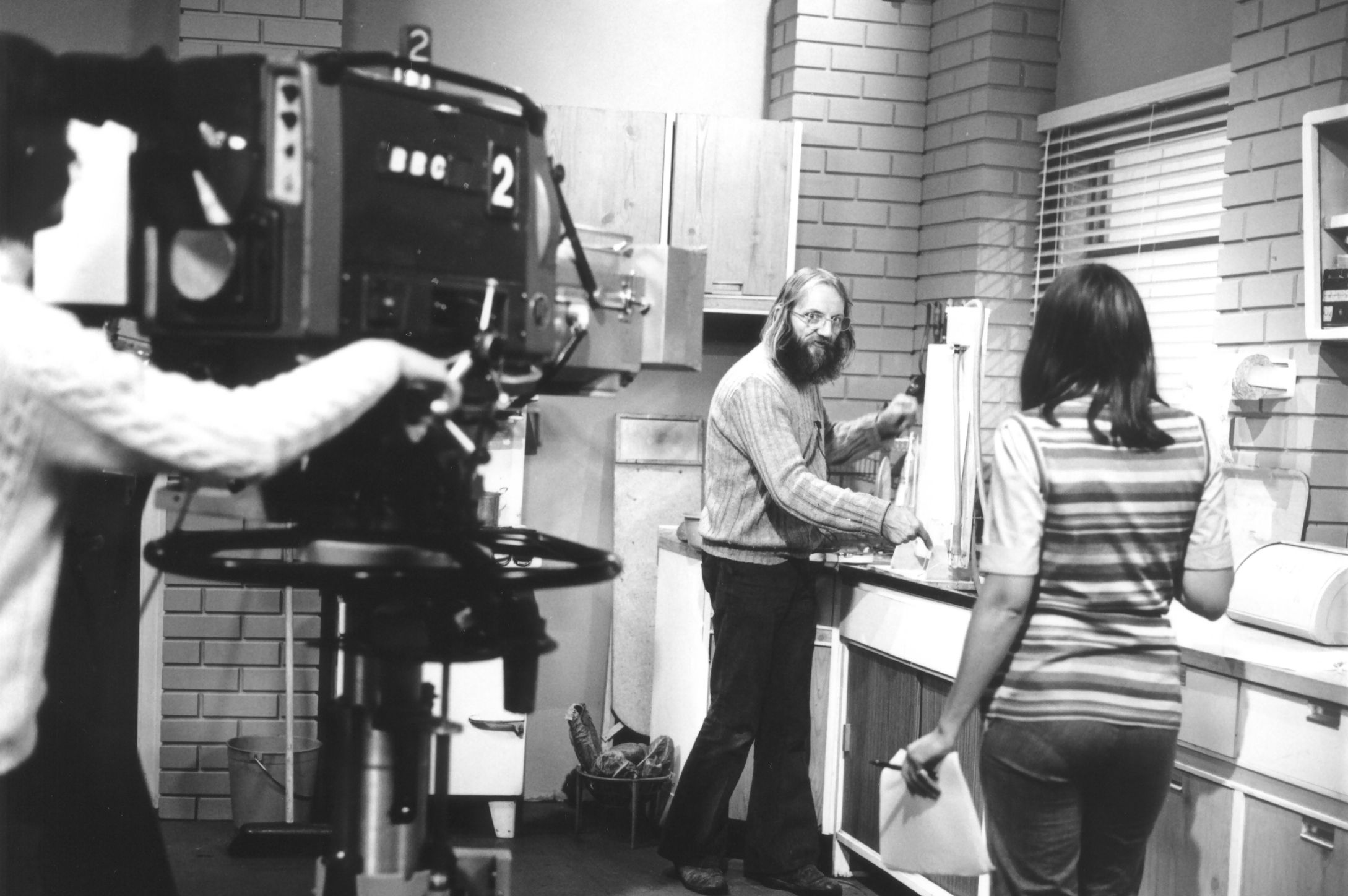
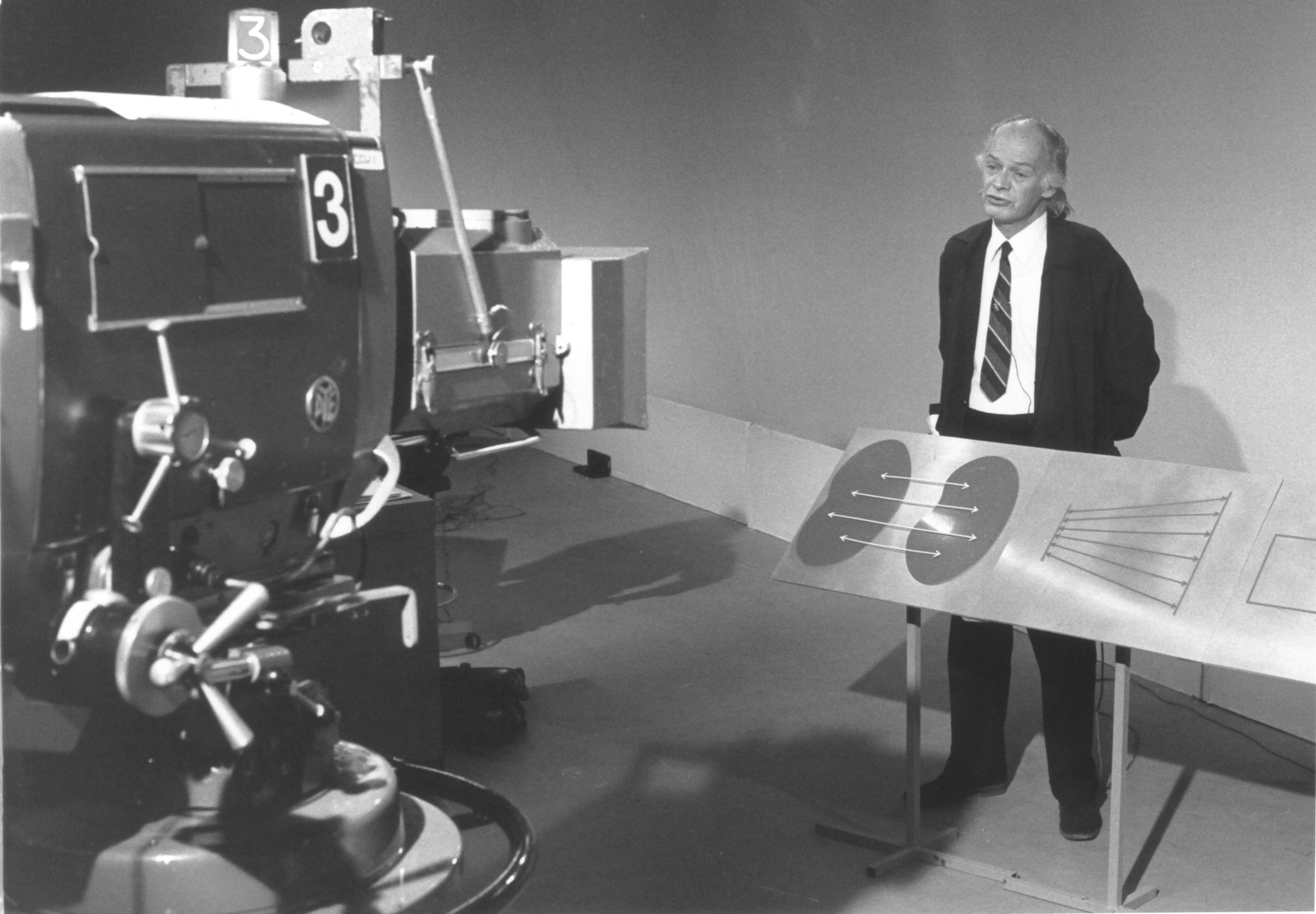
For the first thirty-five years, course broadcasts were made on TV and radio. The first programme was broadcast in January 1971, a clip of which is available on the History of the OU website. Latterly there have been co-productions, right up to the present day with the new Symphony co-production between the BBC and the OU. For each of the four episodes, OpenLearn will feature an article from a member of the OU’s music department, extending the scope of the series. (more…)

Mind your language

Tuesday, November 1st, 2011

Born in Lithuania in 1858 Eliezer Ben-Yehuda, (originally Eliezer Yitzhak Perelman) moved to Jerusalem, married and tried to raise his son (born 1882) to speak only Hebrew. At this time there was only a limited vocabulary in the language but Ben Yehuda campaigned and from 1882 the language was taught in some schools. In 1884 a Hebrew newspaper was started. In 1918 a stone was laid to ceremonially show that there was to be a university in British Mandate Palestine and in 1925 the Hebrew University of Jerusalem was opened. The name reflects how language is often defended through universities. (more…)

Conference, Oslo

Friday, October 28th, 2011

Oslo has just over half a million inhabitants and is located at the head of a 70-mile long fjord. It is surrounded by forested ridges and I’m told that it is straightforward to go skiing, kayaking or ice skating within the city.

It certainly appears cheerier than a glance at the work of local artist Edvard Munch (1863-1944) might lead one to suppose. He painted other images beside the famous one shown here. For instance he provided a mural for a local chocolate factory.

I’ve come here to spend a weekend listening to papers and contributing to discussions in a forum entitled, ‘Rethinking Modern University History’. I hope to situate thedevelopment of The Open University within the wider context of the development of other universities and hear, among other contributions, a paper about ‘The Myth of Academic Dissertations’, another intriguingly entitled: ‘An Inside Job? The Problem of Reflexivity in University History and Higher Education Studies’ and a third called ‘Undoing the European University: The Bologna Process’.

More graphic than info

Thursday, October 27th, 2011

The history of distance education has been compressed into an infographic by OnlineSchools.com, see here. All events prior to 1960 receive as much attention as ‘crime’ (illustrated by a poodle in a mortar board, though not this poodle). A teleological approach is implied by a number of images of evolutionary development, The Open University is not mentioned in this US-focused account and women are not considered to be of significance in this narrative.

Good to see the subject raised. Could try harder with grammar and content.

The OU is missed from this account of the history of distance education which has been produced by Distancelearning.net. There are, however, links to the ‘top distance learning schools’. They are all US-based and private.

University of the airwaves

Thursday, October 27th, 2011

Although it is a child of the sixties the precedents for The Open University are numerous and international. Harold Wilson was influenced by the work on educational broadcasting carried out in Chicago. For a posting about the American School of the Air and The University of Chicago Round Table and Judith Waller, a radio programming manager and later the Educational/Public Service Director for NBC’s Central division in the 1920s see here.  It seems that

Waller helped craft a number of educational programs, including a joint venture between the Chicago Public Schools that successfully connected city-wide special exhibits and the Chicago Daily News into an audio/visual/experiential learning experience.

Facing the social sciences

Thursday, October 20th, 2011

As part of a pilot scheme with The Faculty of Social Sciences, The Open University has launched a Social Sciences fan page on Facebook.  This new platform is an opportunity for all Social Sciences students to network outside of their Tutor Group Forums and current study module/s with other Faculty students within the Facebook community. There are nearly 6,000 fans, some of whom have commented on their learning experiences. Here, for example is one:

It’s a journey – enjoy it. I like the ‘big picture’ concepts in OU Social Sciences especially, and a thoughtful tutor, which both help us stand back from the day-to-day. (And ignore the ironing, which is waiting in my kitchen here as I write my first TMA of DD301 for tomorrow’s deadline

Othrs at the OU have used social media to support learning. The History of The Open University Project is still collecting tales from staff, students and alumni, see here  and is running a forum on student experiences, see here.

Grandad, you’re lovely

Thursday, October 20th, 2011

Writing in the THES on 6th October 2011, Martin Bean argued that the ‘vital work’ of the OU was to support widening participation and social mobility. He went on to refer to the history of the OU, using a familial image:

I recently heard The Open University described as the “grandaddy” of widening participation into education. The title was gratifying, but being the grandaddy brings with it a responsibility to work with the rest of the higher education sector and the government to ensure that we do what is necessary to provide the best possible opportunities – and outcomes – for future generations…. we must redouble our efforts to ensure that all of those who wish to study are able to do so.

(more…)

Registration now open!

Thursday, October 13th, 2011

The History of The Open University Project is very pleased to announce that registration for the following event is now open.

What have we learnt?

Transmitting knowledge, facilitating learning c1960-2010

29 November 2011, 10:30-15:30

Library Seminar Rooms 1 and 2, The Open University, Walton Hall, Milton Keynes MK7 6AA

Higher education has played a significant role shaping our culture and our social, religious, ideological and political institutions. Since the Second World War, in common with other western societies, the UK developed mass higher education from an elite format. New universities opened and existing institutions became polytechnics and later universities. In 1969 the Open University provided a new form of higher education institution. The existing universities developed new student bases and students engaged with a variety of communities

This one-day forum, organised by the History of The Open University project, brings together a range of experts to discuss elements of the history of higher education over 50 years.

The morning session will ask how have students been taught, looking at the move from traditional lectures and tutorials to the use of new technologies, a variety of pedagogies and the development of student-centred learning.

The afternoon session will reflect on 50 years of the student experience, placing learners’ perspectives at the centre.

 Speakers include:

  • Prof John Beckett, University of Nottingham
  • Dr Georgina Brewis, Institute of Education
  • Prof Judith George, The Open University
  • Prof Fred Gray, Sussex University
  • Dr Janet MacDonald, Higher education consultant
  • Prof Andy Northedge, Higher education consultant
  • Prof Harold Silver, Author of Tradition and Higher Education
  • Prof Malcolm Tight, Lancaster University
  • Dr Dan Weinbren, The Open University

There will be a short meeting at the end of the day for current researchers to discuss future workshops in the context of preparing a funding bid.

The workshop is open to all, but those who wish to attend are asked to register in advance as space is limited.

More information, including a provisional agenda and abstracts from the speakers are now available here.

To register please email [email protected].

Happy Birthday THES

Thursday, October 13th, 2011

Happy birthday to the Time Higher Education Supplement which is celebrating its fortieth birthday this week. The newspaper first came out in 1971, the same year that students first started studying at The Open University, a reflection perhaps that higher education had moved up the political agenda. Matthew Reisz describes the background to the paper’s launch in this week’s issue:

It all started with a direct threat. Macmillan, the publisher of Nature, was planning to launch a paper called Senate, aimed at teachers in higher education. Times Newspapers Ltd was worried that this would eat into the substantial advertising revenue of the Times Educational Supplement – and so, in 1971, the Times Higher Education Supplement was born.

(more…)