Archive for the ‘People’ Category

Running the OU

Friday, January 18th, 2013

Towards the end of 1973, immediately following the completion of his degree at Cambridge –where he was awarded a Blue for Cross Country, Les Irvine started work within the OU Student Computing Service at Walton Hall.  A keen runner he had competed for Scotland as a Junior in the ‘International’, the predecessor of the World Cross Country Championships, and he started to arrange runs from the Walton Hall campus.  He also ran between his workplace and his home 6.5 miles away in Wolverton. He only came to work on the bus on Mondays, when he brought in clean clothes and on he returned home by bus with the dirty ones each Friday. A couple of years later in 1975 Mick Bromilow joined the OU as a Course Assistant  in Mathematics. Initially he lodged with Les. He started to run to and from work with Les. They also did a 10 mile run on Monday lunchtimes. By 1976 Mick had moved to his own home and no longer ran to work from Wolverton. However, he kept running and later went on to chair the Marshall Milton Keynes Athletics Club. In 1977 Les emigrated to Australia. By the 1980s Les found that, following surgery for a congenital heart problem, he was unable to run. He died of a heart attack in the early 1990s. Inspired by his example and his pioneering of new routes around the Walton Hall campus, a group of his friends donated to found the Les Irvine Memorial Trophy for the OU Relay. This annual race is still run, generally in March , to this day.
Former AL notes significance of OU

Thursday, November 1st, 2012
Gordon Marsden, MP for Blackpool South and Shadow Minister for Further Education, Skills and Regional Growth is a former Editor of History Today and a former Open University tutor. He mentioned the OU in a recent speech, made to mark the re-opening of Ruskin College, which recently moved to a new location in Oxford. Below is an extract: (more…)

Ian Gass, 1926-1992

Monday, October 8th, 2012

A decade after his death we republish an obituary of Ian Gass. It is by Arthur Butcher who was responsible for the OU’s science in Scotland between 1971 and 1992. (more…)

Customer satisfaction

Tuesday, October 2nd, 2012

 Yet again the OU students have demonstrated their satisfaction with the OU. Surveys of OU graduates 1975 — 1989 indicate that over 70% felt that they derived ‘great’ or ‘enormous’ benefit from their time as students, that over 80% felt that it had had a good impact on them ‘as learners’ and ‘as a person’ and that more than 50% noted the beneficial effect on their careers and on them as ‘members of society’. Subsequently, OU students have presented their studies as an aid to the development of their self-esteem and their careers and as constructive within the development of familial relationships. They have noted dramatic changes to their beliefs, thoughts and tastes and have acknowledged their pleasure in learning. Many have concluded that their OU studies provided them with intellectual stimulation, confidence and ‘cultural capital’. Since their inception in 2005 the annual National Student Surveys have all shown that OU students rate the OU more highly than almost all other students rate their respective institutions. (more…)

Half a century on from the white heat

Monday, October 1st, 2012

It was 1st October 1963. Having just outlined his plans for a University of the Air, which could he said, make a great contribution to the cultural life of the country and the enrichment of the standard of living, Harold Wilson received a standing ovation at the Labour Party’s Scarborough conference. Next on the agenda was a motion on higher education and scientific manpower. It was moved by a union representative, Sir William Carron of the AEU and seconded by David Grugeon of the Socialist Education Association. Mr Grugeon appealed for an end to the present divisions in the educational system – an end to stratification, streaming, and selection. The educational opportunity must be provided for everybody to ‘go as far as you can for as long as you can benefit’. (more…)

Community engagement

Thursday, September 13th, 2012


Photographer: Richard Learoyd Copyright (C) The Open University

A report from the Joseph Rowntree Foundation recently asked ‘How can universities support disadvantaged communities?’ It concluded that ‘Most universities thought community engagement was important’ and that ‘Some universities were much more active than others in supporting disadvantaged communities. Institutional commitment to this is a key factor’. The OU had such engagement written into its founding Charter which specifies the importance of the ‘educational well-being of the community’. Many OU students have long been involved in their local communities because they did not leave their homes in order to study. It seems as if the OU led theway towards such engagement by other universities.

Graduation day tales

Tuesday, September 11th, 2012

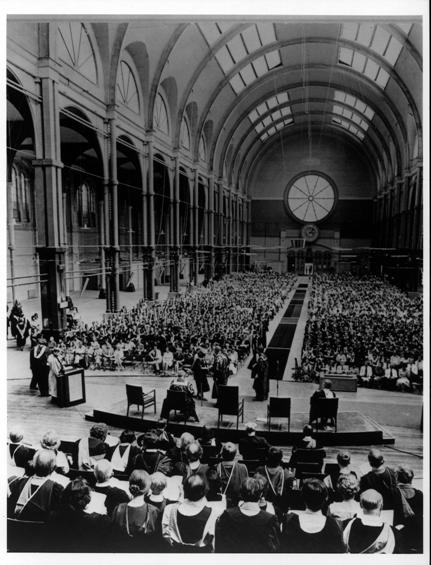
The OU's first degree ceremony, Alexandra Palace, 1973

Numerous graduates have recognised the positive impact of university on their lives. However, for many OU students their studies dramatically changed their trajectory and, for some, their pride in their achievement came after a fall.

While full-time young students are often bolstered through their studies, OU students often acknowledge the collective support and commitment from family, tutors, colleagues and friends. Students did not need to arrive at the OU assuming that a university education was a birthright determined by their class position, educational qualifications or age. Perhaps we can hear in the whoops and cheers that echo around any OU graduation ceremony the collective transformations that the OU has helped to shape. and the recognition that this is an award not only for individuals but also for their networks and supporters.

Interviewed at her graduation ceremony, Alex Wood, indicated that for her graduation was not the marking of an, apparently seamless, individual intellectual journey from school to degree. During the six years she took to complete her OU degree , she went through two bereavements, a break up, a new relationship, a house move, relocation, promotion (she was a police officer) and the birth of two children.  She attended her graduation while nine months’ pregnant with her third child.  

If you have a Graduation Day tale, please share it with us.

Lucky call

Saturday, September 1st, 2012
Since it opened the OU has supported female learners. Many critics were the dismissive accusations about it being the university for bored housewives as if it was a self-evidently bad idea that women should have the opportunity to learn at home.
 
Now the OU is working to further support women. (more…)

Open to satire?

Tuesday, August 7th, 2012

Should a public figure or institution be brave enough to wish, with the poet Robert Burns, ‘to see oursels as ithers see us’, the cartoonist’s art is likely to remind them of another adage: be careful what you wish for. 

The British Cartoon Archive at the University of Kent provides a window onto the ways in which people and organisations have been portrayed through the ages.  As a national institution, The Open University hasn’t evaded capture by the caricaturist’s ink.  This group of cartoons evokes an evolving pen portrait in which the ‘University of the Air’ lived up to its name in at least one respect: it was difficult to pin down in a visual medium.  With no substantial image of its own, the OU was not so much used as a target for satire in its own right, as a means for cartoonists to satirise some of their more ‘usual suspects’.  Groups of people and themes caricatured via their association with the OU included politicians, television, students, changing social mores and class aspiration.

(more…)

178 years since denial of monarch’s declaration of an open university

Saturday, July 28th, 2012

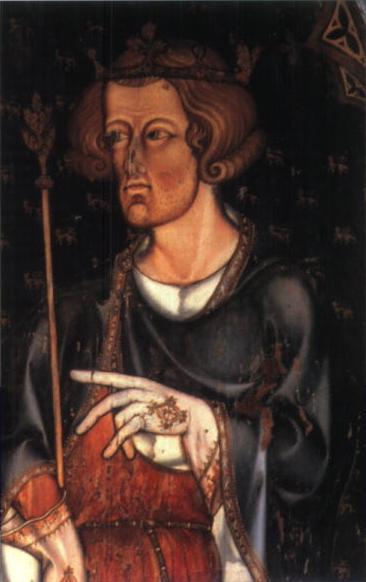
Edward I

Edward I (1239 –1307) is alleged to have gone to Cambridge and declared it to be ‘an open university – open to all’, thus making him one of the earliest users of the term Open University. However, Henry Goulburn, the MP for Cambridge who spoke in the Commons on  28 July 1834,  (this from a report of the Commons Debate in The Times 29.7.1834) argued this was unlikely as on Edward’s death the only known college in Cambridge was Peterhouse. Still, an alleged use of the term in about 1300 makes this the earliest reference. Unless, of course you know of earlier uses of the term.

Image credit: This image is in the public domain.