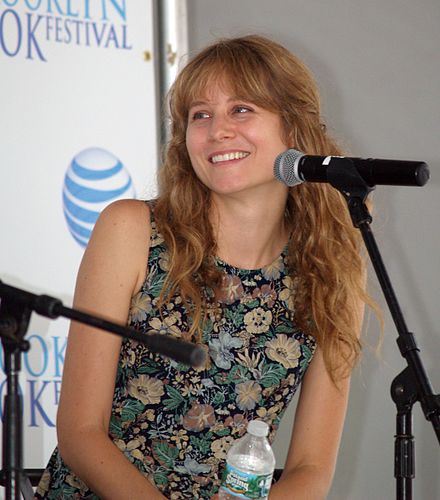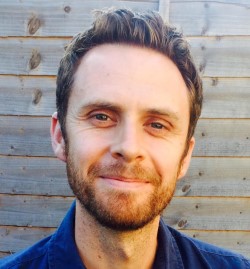
Poetry and theology in lockdown

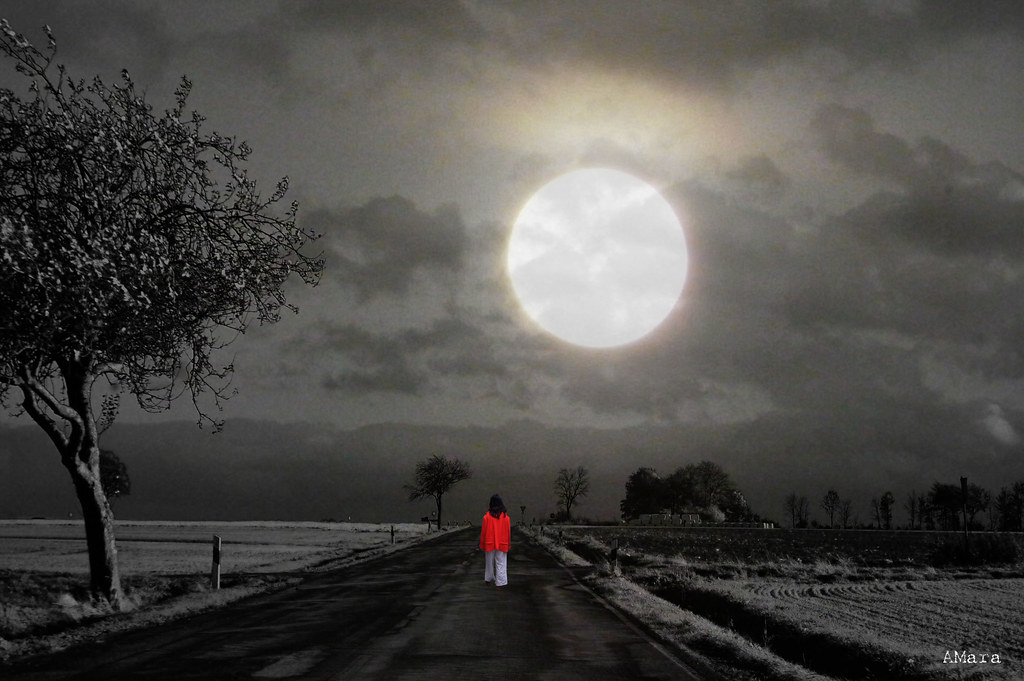
“Walk under the full moon” by Mara ~earth light~ is licensed under CC BY-NC-ND 2.0

Hannah Hunt, Honorary Associate, FASS, Soc Sci & Global Studies

How has lockdown impacted your local community? And how can you stay creative when so much is in flux, and expected ways of being together are denied us? These are questions I have addressed over the last year in my work with Leeds Church Institute as their poet-theologian in virtual residence. LCI is a charitable, faith-based organisation which fosters continuing learning, mutual support and engagement with the arts.

In a previous life, I studied the theology of the early eastern Christian church, and LCI’s invitation to become their poet-theologian in virtual residence drew on my academic credentials as a theologian as well as my skills as a poet. For a year, starting last April, my task was to reflect in a spiritual manner about the impact on the communities of Leeds of the lockdown – using poetry as a medium. Week by week I distilled the statistics, rumours, anecdotes, experiences and fast-moving changes in rules and regulations governing our public and private lives, and sifted them into a 500 word blog. I drew on visual arts, music and the Bible, and both my own poetry and poetry of other poets which resonated with my experiences.

Sometimes I found that a poem I had written some time ago found new voice. Other poems grew new roots in this rich soil (and yes, as a gardener I know the benefit of waste products in compost heaps!) I found the ratio of thinking/research time to writing time meant comparatively little time actually sat in front of the screen; as a poet, I describe myself as a kinaesthetic writer: I need to literally ‘take a poem for a walk.’

As the weeks went by, I found I could not confine myself to Leeds. The Black Lives matter protests following the murder of George Floyd, the devastating explosion in Beirut, the tragic loss of lives of migrants attempting to reach sanctuary in the UK all featured alongside the success of Leeds United, the fortnightly filming of snippets of The One Show on my street, and other more local lockdown phenomena. There are perhaps many opportunities to write about one’s ideas and experiences but it was exciting to be paid as a professional writer/theologian to conduct this reflection.

I should say that in sympathy with the ‘continuing education’ ethos of both LCI and indeed the OU, all my postgraduate degrees (MA, PhD in Theology and MA in Creative Writing) were undertaken as a busy adult, juggling family and work commitments. I am so grateful that despite the rigours of lockdown, its isolation, its loneliness, its anxieties, I have been able to engage in new creativity to share with others.

Hannah Hunt (AL A335, A332).

These are some of the issues addressed in my latest book Reflections: A poet-theologian in lockdown Leeds, published by Maytree Press in February 2021. In addition to my work as an associate lecturer teaching level 3 English Literature and Religious Studies I have a portfolio of activities as a poet, editor and convenor of literary events in my adopted home city of Leeds. I publish my poetry under the name Hannah Stone.

Belfast film poem awarded Berlin prize

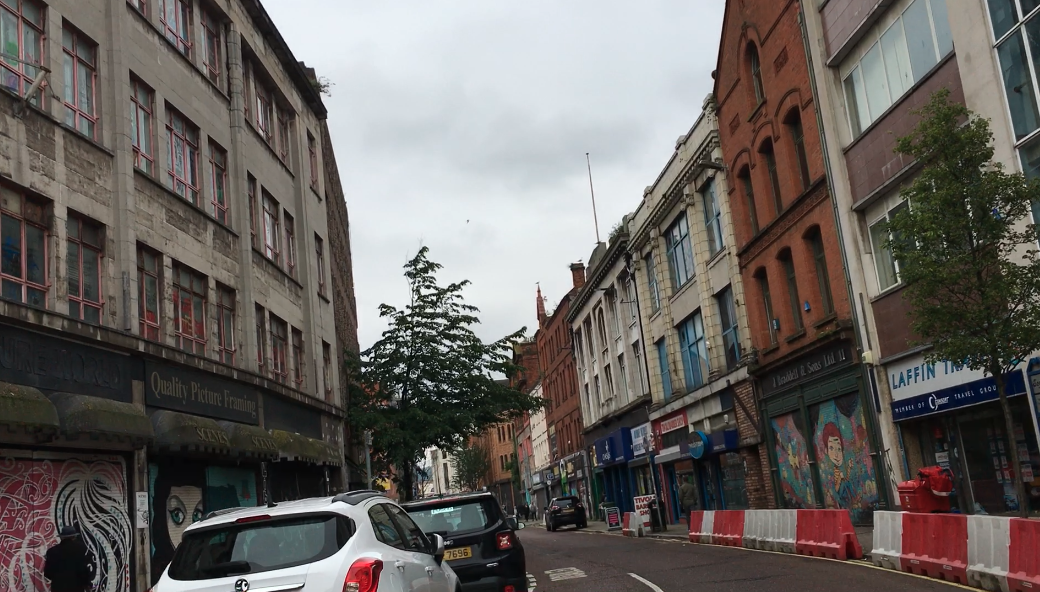
Creative Writing Associate Lecturer Csilla Toldy has won an award for Best Street Art Film at the Berlin Underground Film Festival for her film poem ‘Belfast Exposed’. Sally O’Reilly interviewed her about her work and how this project developed.

Still from ‘Belfast Exposed’ by Csilla Toldy.

You can watch Csilla’s video on Youtube here

How does ‘Belfast Exposed’ relate to your previous practice as a writer/poet? How long have you been working with images?

I have been writing poetry for much longer than making video poems, but because I am a scriptwriter and I had an interest in art films and experimental films, I started to research video poetry as an artform. After making my first video poem (Point) with the support of Northern Ireland Screen, and having been selected with another (Hommage) to the Videoholica Video Art Festival in Varna, I was invited as a speaker for the Mix2 Conference of Digital Writing at Bath Spa University, where I delivered a paper on “Metaphors in videopoetry”. This paper is now published on academia.edu.

Is place in general and Belfast/Northern Ireland in particular important in your work more generally?

Yes, I wrote many poems about the cities I visited, and place is important in my prose as well. I lived in many different places during my life, and being on the move, on foot or by vehicle always inspires me.

How did you come to write this? What came first, words or images, or did it evolve in a different way? Was the idea of using multiple voices to create a choral effect there from the beginning?

I wrote the poem in the voice of a Syrian immigrant around 2015, when the migrant crisis started in Europe. It became one in a series of poems that I wrote about cities and I read them at venues in Belfast, Dublin and Bray. In 2019 I was selected to take part in the New Voices of Ireland Series 7 organised by the Centre for Creative Practices in Ireland. They select 10 migrant artists for each series and Series 7 had the theme of Cultural Memory – Transition, Temporality, Transcultures. I used the voices of my co-artists and put out a call for local speakers on Facebook to give me their voices for the film. I was interested in the diversity of accents. The idea was that I would use the footage of Belfast in movement with special focus on the murals and use the voices of migrants and locals mixed as a soundscape. People could interpret the poem as they pleased. The choral effect was developed during the editing phase.

Can you tell me about the process of producing it? How long did it take?

Filming happened during a couple of afternoons. I knew the places I wanted to show, East Belfast and West Belfast, the two hemispheres with their opposing murals, but we start the film in the Cathedral Quarter, the cultural hub of the city where the gay bar the Kremlin is situated with its Lenin Statue and the rainbow flags. I found this always exhilarating, for I grew up in socialist Hungary in the shadow of this icon. Each, the Protestant and the Catholic communities have marked their territories with their murals, of course, but the film finishes with the Rise sculpture created by Wolfgang Buttress, symbolising unity. Collecting the voices took longer and editing took about a week, which I did on my computer.

When did you receive the award? Was there a virtual ceremony? (Shame not to go to Berlin!)

I heard about being short listed at the beginning of a week in October and by the end of that week I got the award. It all happened very quickly. It is a shame that they had to cancel the physical event, but they will screen all the winning films next year and I am hoping to go to Berlin then.

What are you working on now? And do you have future plans for similar collaborations/multi media work?

Around this time last year I was commissioned by the Executive Office of Northern Ireland to create a public artwork for Holocaust Memorial Day 2020, to mark the 75th anniversary of the liberation of the Nazi concentration camps. I worked on this video poem in the first ten weeks of 2020. The launch was planned for 15th April, the day when the British liberated the last camp, Bergen-Belsen, but the pandemic made this impossible. The finished video poem, “Here I Stand” will be launched on Holocaust Memorial Day 2021, on 27th January online on the website of the Executive Office and the Holocaust Memorial Fund. It was a great honour to work on this film and it was a deeply emotional journey. For this, I wrote the poem at the same time when I applied, so it started with the text as well, but I created a story board in tandem. I travelled to Paris and Budapest to shoot and I used archive footage as well. The poem was inspired by the story of a boy, who survived Auschwitz because he lied about his age. His mother told him to join the other line and go with his older brother and thus she saved his life. The poem is voiced by the mother and the son as an old man, looking back. Alongside the video poem, I made a 30-minute reportage with survivors of genocides in the 20th Century for educational purpose. I am very upset about the rise of the far right in Western countries, including Hungary and Germany and even the UK, and I feel that living witnesses have to be given a voice. I was privileged to interview survivors from Auschwitz, Rwanda, Cambodia and Bosnia, and asked them what their message was for the youth of today.

My next commission is an eco-video poem for Earth Day 2021. This will have multiple translations of the same poem about the earth, which I wrote at the age of 18 in Hungarian, originally. I asked the translators to voice the poem for me in their own language. I am trying to get voices from each continent, and even in languages that are on the brink of extinction. I started to collate the footage during lockdown. It will be the same field and the same beach over the seasons, near the place I live, but you can imagine that the beach is polluted with the debris from the sea, plastic and…masks! This is work in progress, but I am hoping to raise awareness for environmental issues as well, and the often-neglected fact that the earth is our shared home.

Gender and Otherness in the Humanities (GOTH)

Interview with (Peg) M A Katritzky, Senior Research Fellow, Department of English & Creative Writing

Can you tell me more about Gender and Otherness in the Humanities (GOTH)?

In 2019, GiTH (Gender in the Humanities) a research group active in the Arts Faculty of The Open University from around 1990 to 2013, was relaunched as GOTH (The Centre for Research into Gender and Otherness in the Humanities). A substantial US award funded the launching of GOTH as a Research Centre based in the OU’s School of Arts and Humanities, Faculty of Arts and Social Sciences, and a three year GOTH Doctoral Studentship, awarded to Chris Dobson in 2020.

Our annual programme of events, planned and guided by our Committee and Advisory Board, is designed to appeal at various levels. We support OU researchers and postgraduates with specialist interests wishing to strengthen their interdisciplinary network; additionally, we welcome all OU employees and postgraduates with more general GOTH-related interests wishing to meet colleagues and enjoy a cultural experience, at whatever level of engagement. GOTH currently has more than 50 members.

Are you talking about the Humanities at any time, or is there a focus in terms of historical period?

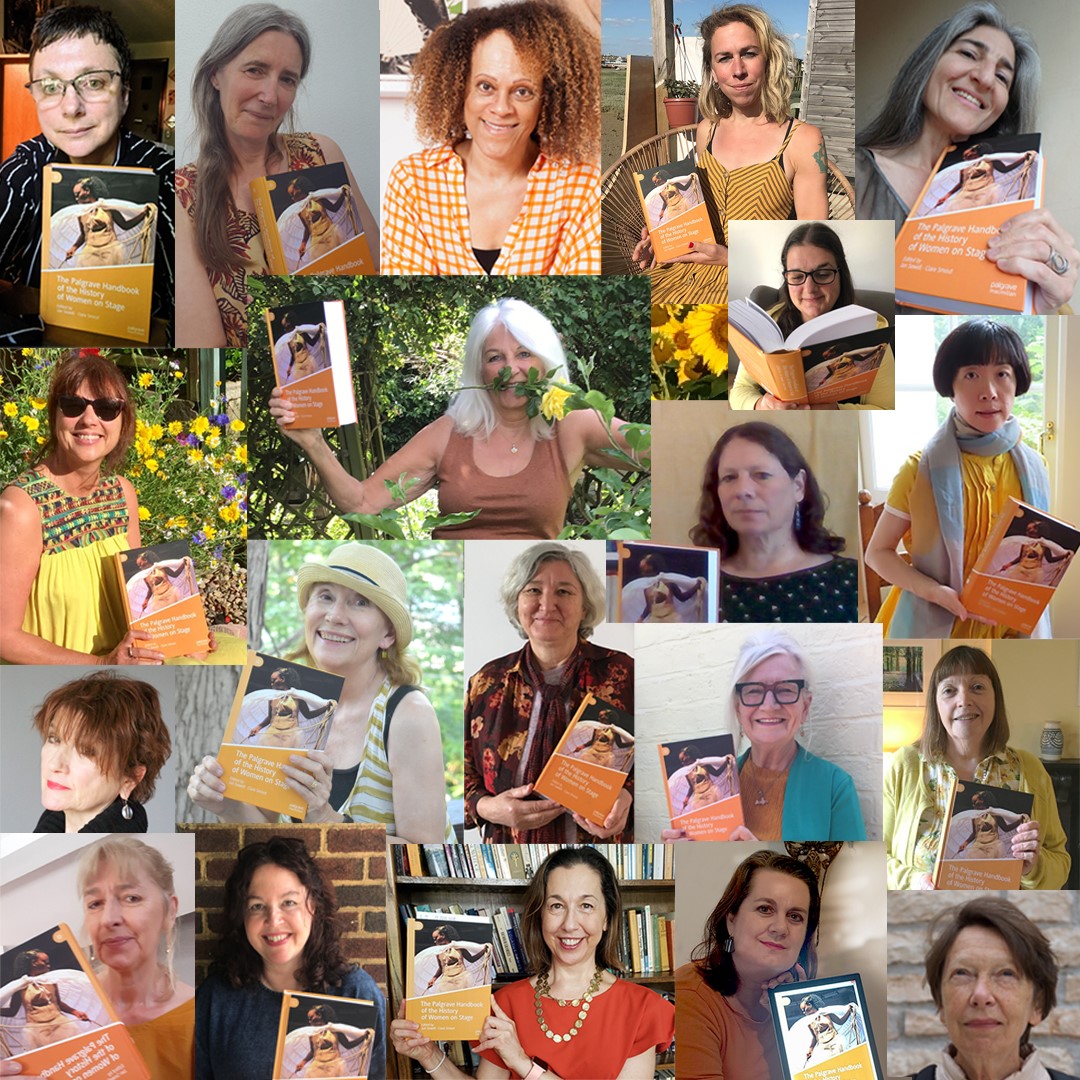
We welcome collaboration with the Faculty’s historically focused research groups, such as those for the Classical, Medieval & Early Modern and Post-Colonial periods. Rather than having a specific historical focus, we aim to support members’ GOTH-related research interests. In connection with one of these, ShAC, I published a book chapter (“Margaret Cavendish’s Female Fairground Performers”) in The Palgrave Handbook of the History of Women on Stage, 2020 (see publicity poster with Bernardine Evaristo below). GOTH provides a platform for members’ research bids, and has recently submitted a GOTH-based bid for European funding for EURO-PPP (Trans-European Performance, Practice and Patronage as Cultural Heritage). If successful, this collaborative international three year project will examine live travelling performance of every period, with particular emphasis on the present.

Poster for The Palgrave Handbook of the History of Women on Stage, 2020

What events are you holding online? Are there ways in which lockdown and online meetings gives a group like GOTH greater global reach?

For now, we are adapting our regular events to the pandemic by going online with our entire events programme, and maximizing current opportunities to attract inspirational overseas presenters and widen participation:

* The live performances at our October 2019 launch party led to requests for more live theatre visits. While that’s on hold, Christine Plastow led an October 2020 online viewing of the recorded livestreamed production of By Jove Theatre Company’s Medea LIVE, followed by lively online discussion; more performances will follow.

* Our first Reading Group (‘Nationalism and Feminism’) was a live event led by Suman Gupta in January 2020; on 3 December 2020, Francesca Benatti will go online with our second Reading Group (‘Digital Comics’).

* Similarly, the first GOTH / Health & Wellbeing PRA Joint Annual NetWorkshop was held live in January 2020, with around 20 delegates enjoying excellent presentations by PG Kim Pratt and postdoc Sally Blackburn-Daniels, and an informative funding workshop led by Shaf Towheed (English) and Gaynor Henry-Edwards (WELS), followed by a Research Showcase of members’ recent publications and funding successes. The second Joint Annual NetWorkshop (4 Feb 2021), featuring OU speakers Sophie-Grace Chappell (keynote, Philosophy) and Naomi Barker (Music) will be online.

* Our inaugural GOTH Awayday was to Hardwick Hall in May 2019. Plans for London Awaydays led by Clare Taylor and Gemma Allen are on hold while the Committee explores options for moving our Awaydays online.

* The Annual GOTH Research Symposia, funded by a modest US follow-on award in 2020, were planned as specialist invitation-only residential research workshops. The first (20-21 May 2021) has moved online; we are honoured that GOTH board member Noémie Ndiaye (University of Chicago) has agreed to present the keynote.

* An exciting new development is the monthly GOTH PG Forum. Postgraduate convenors Chris Dobson and Sharon Wiseman (English) and Kim Pratt (Classics) welcome all OU postgraduates with GOTH-related interests on the first Thursday of each month. They first met on 5 November 2020; future activities include a takeaway party on December 3.

What would you like to see GOTH achieve?

Essentially, GOTH seeks to promote an awareness of the centrality of diversity to an understanding of the humanities, both within the OU and in society more broadly. We aim to support the GOTH-related activities and interdisciplinary exchanges of OU colleagues and postgraduates. More generally, we seek to continue the OU tradition of providing conventional academic institutions with helpful templates for online events, ever more relevant in the current circumstances.

‘Things we cannot know’: Julian Barnes’ The Man in the Red Coat

Alistair Daniel, Associate Lecturer, Creative Writing

In June 1885, three Frenchmen – the prince Edmond de Polignac, Count Robert de Montesquiou-Fezensac, and the ‘celebrity gynaecologist’ Dr Samuel Jean Pozzi – arrived in London. They went shopping, had dinner with Henry James, and went home. It’s a thin premise for a story, fictional or real, yet from it Julian Barnes has woven a typically rich and absorbing tapestry in The Man in the Red Coat (2019).

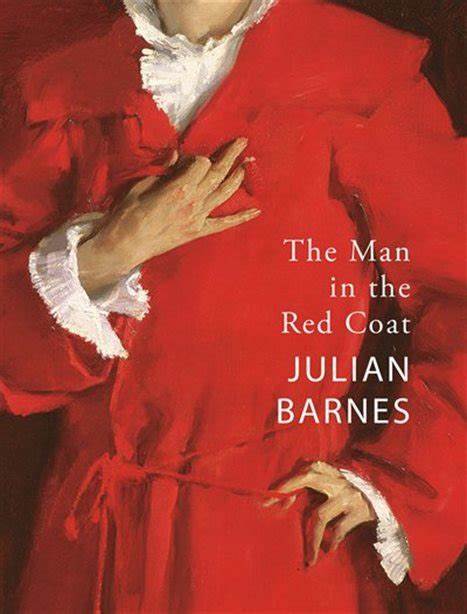
From A History of the World in 10 ½ Chapters (1989) to Levels of Life (2013), Barnes has spent a long and garlanded career eluding categorisation and The Man in the Red Coat is no exception. Is it a group biography, a biography, or something else? As a portrait of its three protagonists it’s more than lopsided, since Barnes largely ignores Polignac in favour of Montesquiou and Pozzi, both of whom make fascinating subjects in their own right. Montesquiou was a snob with a taste for cruelty, picking up talented boyfriends and destroying them when he grew bored. The dark allure of his character was not lost on artists of the time, and the count appears in several novels, including Huysmans’ À rebours (1884) and Proust’s À la recherche du temps perdu (1913-27). He was also the model for Whistler’s Arrangement in Gold and Black (1891-2). It’s perhaps this artistic over-representation that encourages Barnes to focus on Pozzi, himself the subject of Sargent’s Dr Pozzi at Home (1881), a portrait that provides the cover, the title and the inspiration for this book.

Image of book cover for ‘The Man in the Red Coat’ by Julian Barnes.

If Barnes recounts Montesquiou’s bad behaviour with relish, his sympathies lie firmly with Pozzi, a pioneering surgeon whose innovations in hygiene and surgical technique radically improved survival rates, particularly for bullet wounds to the gut. He treated both public and private patients and was tireless in his promotion of high medical standards all over the world. He was also something of an international playboy, hobnobbing with celebrities and taking mistresses to Bayreuth. Nor did his professionalism prevent him from seducing his patients, and Barnes is careful to trace the impact of his behaviour on his long-suffering family through the journals of his outraged daughter Catherine.

Pozzi himself kept no journal, and it’s perhaps for this reason that The Man in the Red Coat sidesteps conventional biography. In fact, for long stretches the book neglects Pozzi in favour of a stroll through fin de siècle Paris, with Barnes as flâneur and guide. It’s a world populated by artists, including Oscar Wilde, Sarah Bernhardt, the Goncourt brothers, Huysmans, Proust and a host of less illustrious figures, like the Symbolist poet and novelist Jean Lorrain, who wasted his talent in endless feuds (he once fought a duel with Proust).

Writing in the fragmentary, episodic style familiar from his recent fiction (The Sense of an Ending, The Noise of Time), Barnes grants himself licence to stray into any area that takes his fancy – the Dreyfus affair, duelling culture, Oscar Wilde’s tour of the US – and in many ways The Man in the Red Coat reads as a compendium of familiar Barnesian enthusiasms, including Flaubert, literary style, the nature of biography and 19th-century France. As a result the book, while never less than entertaining, is more extended essay than biography, a companion piece to Something to Declare (2002), his essay collection on French culture, liberally sprinkled with colour plates and photo cards of fin de siècle celebrities. It meanders, with frequent detours, through Pozzi’s life in loose chronology, before eventually arriving at his demise.

One of Barnes’ preoccupations – here as elsewhere – is with the challenges of historical memory. ‘“We cannot know”’, he writes, ‘is one of the strongest phrases in the biographer’s language,’ and in a late section entitled ‘Things we cannot know’, Barnes lists some of the unanswerable questions that surround Pozzi’s life. Many novelists would view the gaps in the historical record as an opportunity, as Barnes is well aware: ‘All these matters could,’ he notes, ‘be solved in a novel.’ Which begs the question: why didn’t he weave a novel out of such rich – and tantalisingly incomplete – material? After all, he has done it before: both Flaubert’s Parrot (1984) and Arthur and George (2005) made fiction from nineteenth-century lives. It’s a question that only intensifies at the book’s denouement, when a disgruntled patient shoots Pozzi in the gut and the most celebrated surgeon of the age suddenly finds himself under the knife. Here Pozzi’s life assumes the pattern of art. For some novelists the symmetry would be irresistible (Ian McEwan made a similarly ironic plot twist the climax of Saturday). But Barnes is unmoved. As a novelist he is allergic to neat plotting and glib denouements and, as Sebastian Groes and Peter Childs have pointed out, ‘the unanswered and unresolved meanings of life and death suffuse all Barnes’s work’ (2011, p. 9). In Barnes’ view, it is not the job of fiction to stitch life into pleasing patterns and shapes. It’s only in non-fiction that ‘we have to allow things to happen – because they did – which are glib and implausible and moralistic’ (Barnes, 2019, p. 258). It’s this commitment to life’s complexity, and the limits of knowledge, that accounts for the book’s episodic structure, a structure that, through its gaps and silences, its detours and shifts in focus and tone, embraces mystery, leaves loose ends untied and offers more questions than answers. In Flaubert’s Parrot, Geoffrey Braithwaite likens biography to a fishing net, ‘a collection of holes tied together’ (Barnes, 1984, p. 38). Nearly 40 years on from that award-winning novel Barnes is still fishing in these philosophical waters, hauling lost treasures from the deep, inspecting the flotsam, and contemplating all the things lost at sea.

The Man in the Red Coat is available in hardback.

Barnes, J. (1984), Flaubert’s Parrot, London: Picador

Groes, S. & Childs, P. eds (2011), Julian Barnes: Contemporary Critical Perspectives, London: Continuum


Ed Hogan interview

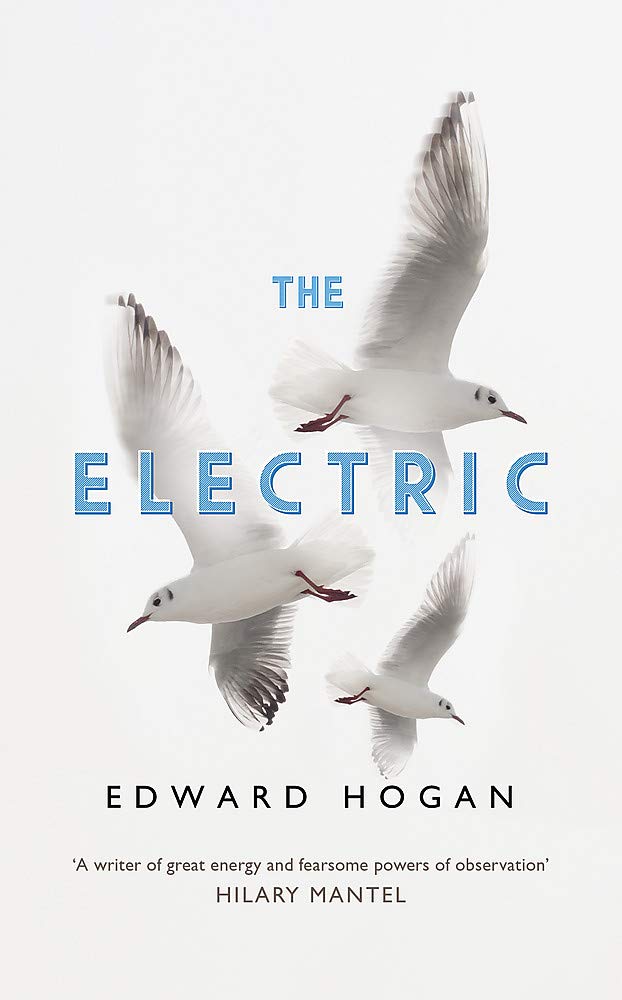
Ed Hogan is a Lecturer in Creative Writing at the Open University. His first novel, Blackmoor, won the Desmond Elliott Prize, and was shortlisted for the Sunday Times Young Writer of the Year Award. Other novels include The Hunger Trace, and Daylight Saving, which was shortlisted for the Branford Boase Award. His next book, The Electric, is published by John Murray, in 2020. He is now writing short stories, has recently been longlisted for the Costa Short Story Prize and the Sunday Times Audible Short Story prize.  Here he discusses his approach to writing short stories with Sally O’Reilly, Senior Lecturer in Creative Writing.

Sally: How would you define a short story? And what are its limitations? I’ve read a number of contemporary short stories recently, and many of these cover long time periods, have multiple characters and are told from different points of view.  What’s your take on this?

Ed: Last year, I made a commitment to read a short story every day. What struck me was the variety of the form. Yes, I read lots of oblique, Hemingway-ish stories. But, as you suggest, there were also many long stories with lots of narrative – the type Alice Munro specialises in. Some were like dramatic monologues, while others played with the conventions of sub-genres. I read epistolary stories, and stories that took the form of job inductions, or psychotherapy sessions.

Short stories allow you to travel very quickly in your reading. One particular week, I read stories by a writer from Korea (Kim Young-Ha), Argentina (Samanta Schweblin), Zimbabwe (Petina Gappah) and…Derbyshire (Hilary Mantel). In doing this, I realised that some of my earlier assumptions about the form were culture-bound.

I think short stories lend themselves to formal boldness, because they allow both readers and writers to walk the tightrope a bit more. A writer might try something unusual, because it won’t require 500 pages. And a reader might agree to suspend disbelief for 2000 words.

In terms of effects, I can think of many occasions when I’ve cried over short stories, and several times recently (James Salter’s ‘Last Night’, and Camille Bordas’ ‘The Presentation on Egypt’) when I have literally shouted out in shock.

I know you’ve turned to reading short stories recently, too. How did that come about?

Sally: I was partly inspired by your example! And also, because I am writing a novel, I feel freed up by reading short stories. I feel that the possibilities for writing at any length seem looser and more open after reading short stories. A lot of novels, my own included, include a certain amount of ‘business’, linking scenes, sections to establish character, sections which slow things down for a while. In short stories, there is so much precision and intensity. 

Do you think there are fashions in the short story, in terms of what is published, and what competition judges are looking for? Writing is always a conversation/argument/response to other writing, but is this sense of engaging with other stories stronger when you are writing at this length? Is it inhibiting to be aware of the zeitgeist, or do you find it useful to immerse yourself in short fiction when you are writing stories?

Ed: Recently, I read three short stories by well-known British writers (Jon McGregor, Sarah Hall, Cynan Jones), and each one was about a person gradually realising that they’re stranded in a large body of water. I found that very striking. Island anxiety, perhaps.

I read short stories every day, but they’re not always contemporary ones (Daphne Du Maurier, yesterday). In my writing, I’m much more interested in the moment of composition than the moment of publication.

In terms of competitions, I’m drawn to the anonymity – the fact that you don’t send a CV with it. Although I know that the anonymity of competitions can be problematic.

I guess a lot of novelists, in June 2020, are probably looking at their contemporary novels, and thinking, ‘Ah. Right. I may have to make a few changes, here.’ That makes assumptions about novels being ‘news’ or even mimetic, but what about you? I know you’re writing historical fiction, but has the pandemic, or the protests, made you look again at your work in progress?

Sally: Yes! The novel I am working on is set in 1899 and the ‘present’, and this has now morphed from 2020 to 2019 due to coronavirus. There is bound to be a weird thing in contemporary fiction where what we thought of as normal life (with all its abnormalities) ended in 2019 and then there is a sort of cliff edge. Having said this, some of the themes I’m writing about relate to nature and science, and the pandemic makes this aspect seem even more urgent and relevant. The zeitgeist has changed, and that will permeate fiction. 
Sally: Can you tell me more about your Sunday Times Audible longlisted short story ‘Single Sit’, and how you came to write it? Did it come easily, or did you spend a long time writing and refining it? How did it compare to the process of producing other short stories that you have written?

Ed: ‘Single Sit’ is about a conservatory salesman on a call with a potential customer. My dad sold windows and conservatories for many years, alongside his successful semi-professional football career, so I knew some of the language from that business. (Although Frank, my character, is very different from my dad). I’m interested in work vocabularies. Kick-ins and blowouts and single sits.

It arose from a bit of dialogue between Frank and Mrs Cortez, the customer. Once I hit on a relationship – any kind of relationship – I feel like I might have a story. So, I wrote the first two thirds in a few days. But then it went somewhere unexpected, and I couldn’t finish it for ages. I’m in a writing group, and they helped me a lot with the ending. The whole process, start to finish, with editing and putting it away…it took two years.

The longlisting was a fluke, but this is a story about a salesman, and the first principle of sales is that you play the numbers. Knock on every door, enter every competition. ‘Double your failure rate’, as they say.

Sally: You have published several novels, with your latest, The Electric, coming out this summer. Is it possible to compare the process of novel writing to short story writing?

Ed: A while ago, I was asked to recommend some books for a friend. The list I wrote contained about six short story collections, and the others – things like Hawthorn and Child, Legend of a Suicide, In Other Rooms, Other Wonders; Union Street, The Vegetarian – weren’t really ‘conventional’ novels, but collections of linked stories. In those books, much meaning came from the overlap of the stories, the repetition of themes, ‘the singular obsessions endlessly revised’ to steal a phrase from Thomas Lux. I thought I should investigate what those reading tendencies might mean for my writing practice. I’m still new to the short story as a writer, though, and most of the stories I write are terrible, but it’s a process.

There are practical considerations, too. I reckon there’s a moment in writing – and I’m certain this goes for writing in all research disciplines – where you become absolutely absorbed, completely compelled. It’s a physical thing. Currently, given busy personal and professional circumstances for which I am very grateful, the short story is the form which allows me to complete a draft of something while I am still in touch with that initial impulse. To finish before I forget why I started. Of course, then you have to spend two years revising it!

Sally: Do you like writing shorter pieces? Do you find them ‘easier’ in any way, or just different from novel writing? Do you envisage a short story in its entirety, or do you ever write not knowing the outcome, as novelists often do?  And, final query in a multifaceted question, can you write short stories while you are working on a novel, or does the one exclude the other?

Ed: I definitely don’t find short stories easier. Writers often balk at the question, ‘Where do you get your ideas from?’ but that’s where I struggle. George Saunders says that when he finishes a story, he’s convinced he’ll never have another idea again. I feel like that, too. Unfortunately for me, that’s where my similarities with George Saunders end.

One thing about producing several stories over a year or so is that you see your unconscious preoccupations delineated quite sharply. Much of my recent short fiction has taken place in or around cars, despite the fact that I don’t really like them. When you see those connections, you can decide whether to resist or explore them.

The editing process is very different with a short story, isn’t it? For a start, you can re-read your story in one sitting. I remember watching Sympathy for the Devil, the film which shows the Rolling Stones in the studio, developing the song of the title. I was so jealous. With a pop song, you try it one way, and three minutes later, you can – if you’re Mick Jagger – say, “Oh, not like that, Charlie, you mug!” and try it another way. It takes me three weeks to read my own novel.

 

Cold Dark Matter: Writing a poetry collection during lockdown

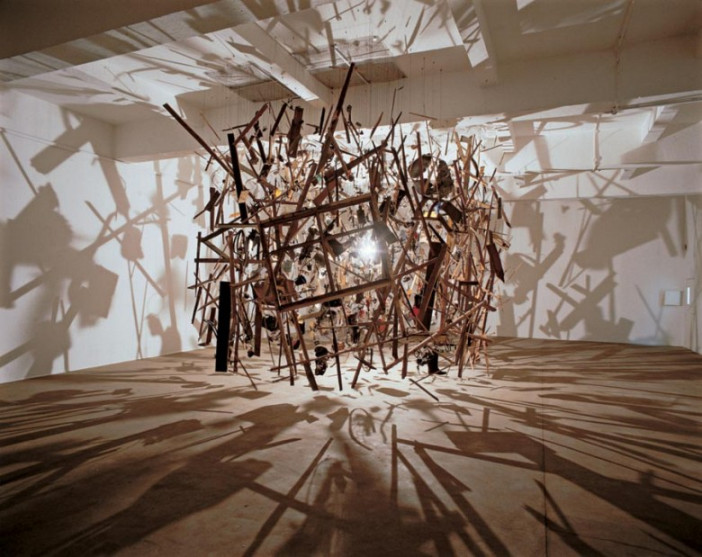
Image shared under Creative Commons licence: ‘Anti-Mass’, de Young Museum, San Francisco, US, https://www.famsf.org/blog/framework-anti-mass-cornelia-parker Source/photographer “Anti-Mass,” Cornelia Parker (de Young Museum)

By Patrick Wright, PhD Student, Creative Writing

As an introvert, and usually working from home, the lockdown has allowed much of my practice to go on unabated. Some aspects have intensified: developing an active imagination and reflection are two examples that come to mind. While in some ways productive, there’s always the lingering threat of such faculties lapsing into torpor, lethargy, or morbid daydreaming. As immersive as my own bookshelves have been, the tranquillity of my back yard, and embrace of digital technologies, underlying my new methods is a quiet despondency.

Still immersed in a grief process, after losing my partner, and left alone in a flat, surrounded by our combined possessions, is a dangerous recipe – especially as a poet, where life is often fraught with precariousness and introspection.

From my first experience of a PhD, I know it can be isolating at the best of times; the ideas just too rarefied for friends, family, or pub conversation. Now, though, the restrictions on movement and socialising have greatly exacerbated this reality. I miss having a workplace, with those familiar water cooler moments; and I feel at some remove from my colleagues, living as I do in the North-West. Though I am clear in my purpose and grateful for my vocation. This, for now, is a Creative Writing PhD with the working title Cold Dark Matter: The Ekphrasis of Modern and Contemporary Art, supervised by Siobhan Campbell and Jane Yeh.

As a means of survival, I imposed for myself a structure and discipline. I replaced my familiar café environment with a picnic table. I’ve written many of my poems in cafés: maybe it’s something to do with finding an optimum decibel level for my creative flow, or I feel reconnected with human presence.

Image shared under Creative Commons Licence: “let me show you” by kygp is licensed under CC BY-NC-ND 2.0

I also had to replace my excursions to galleries and museums with the use of art history books, exhibition catalogues, and virtual museum tours (e.g., Kettle’s Yard). My home library has revealed overlooked marvels, as I’ve lived out a similar narrative to the one in Xavier de Maistre’s A Journey Around My Room.

My practice research focuses on the ekphrasis of modern and contemporary art; and thus far I’ve enjoyed writing in situ: in front of a painting for instance, or spending time in the holdings, having arranged a private viewing. On such occasions, I’ve sketched first drafts that incorporated, in some way, the details on the surface of the artwork, the texture, the detritus, and so on; details that may not been seen in a reproduction. There’s also the smell of the gallery, the sounds around me – the chatter of tourists, the screams of children – and the paratextual features: the blurb, the frame, or other images in juxtaposition, curated alongside.

Inspiration has, no doubt, been affected. I have been less productive during lockdown. It’s likely that we’re not wired to flourish while detained and enduring a monotonous routine. It might also be the case that – at this stage in writing what will be my second poetry collection – I’m less eager to just write another poem, especially if it’s similar to something I’ve written before. The reflective part of my thesis has aided my awareness of such repetition, while I’ve become more conscious in general of my decision-making and poetics; though this is a challenge, as I’m still habituated into an M.O. that’s often instinctive. I’ve also found that analysing the complexity of my inner dialogue can be overwhelming; or lead to the realisation that my mind is, on some level, preoccupied with nerdy considerations, such as obsessing over whether to use parataxis in the third line of a ghazal.

My recent confinement has also been, like many kinds of limitation, enabling. I’ve begun, over the past few weeks, a series of poems that respond in some way to the pandemic. One recent example is my poem ‘An Exploded View’, which takes its title from an installation by Cornelia Parker (‘Cold Dark Matter – An Exploded View’):

Without being able to see Parker’s artwork first-hand, my poem begins with recalling it to mind. I visualised her installation (an exploded shed, frozen in time), then visualised how my poem could look, set out on the page with a shape analogous to the artwork. (For now, at least, my words are ‘exploded’ in fragments around the page.) During my research, I consulted Google Images, which provided a series of intriguing viewpoints under different lighting conditions; and yet I was aware the re-mediated artwork was no substitute for standing in the gallery. So many angles are elusive; my distance from the work is accentuated; and the device through which I look (an iPhone) makes the jpegs obscure and subject to unwanted reflections in the mid-afternoon sun. In this poem, and others, the technology – with all its filters and frustrations – becomes part of what I write about, along with peripheral aspects of my often incongruous lived milieu (‘a sky-dance of swallows’).

Despite ongoing struggles in seeing art through such screens, I’ve been drawn to André Malraux’s notion of the ‘Imaginary Museum’: how, in a culture of reproduction, art is now potentially more accessible and democratic. Likewise, I’ve applied the idea of the ‘death of the author’: rejoicing in my own interpretations or misperceptions.

For now, I’m content to borrow at least half of Parker’s title for my collection. A title, I’ve found, can have the power to drive a collection forward, to give it an identity or coherence. Many of my poems – like ‘An Exploded View’ – look to clash disparate lexicons together: in this case, art and cosmology; and I like how ‘cold dark matter’, rather than a phrase coined by Parker, is also a term that refers to around 85% of the universe, which remains invisible. In addition to suggesting how my ekphrastic collection is tethered to this and other artworks, the title is apt for another reason: my poems make use of scientific vocabulary to explore the metaphysical questions that arise in the space of bereavement.

Caron Freeborn (1966-2020): an appreciation

Steve Padley, Staff Tutor, English

Caron Freeborn, who died in April after a short illness, was a poet and novelist, and an AL in Creative Writing at the Open University. She taught on A215 and A363. She was also a close personal friend for almost 30 years, but, more than that, she inspired and influenced me massively, just as she inspired so many students through her teaching for the OU, the University of Cambridge and Anglia Ruskin University.

I first met Caron and her partner, Chris, in 1991, when we were students at the Summer School in York for A319 Literature in the Modern World (Caron and Chris had met each other at another York OU Summer School the previous year). Caron and I bonded over the similarities in our backgrounds: we were both from working-class families and the first in our families to get a University education. We also bonded over some of the texts and writers we encountered on A319, above all, the poetry of Tony Harrison, whose representations of working-class experience spoke to us in powerful ways.

Although Caron was in many respects a typical OU student, she didn’t complete her OU degree, instead using her credits to go to Lucy Cavendish College, Cambridge, to read English. To many in Cambridge she may have seemed an unlikely student, with the kind of Essex accent still not often heard within the more traditional colleges, but it was for her sharp intellectual rigour and the breadth and depth of her passion for literature that she stood out, not for her accent.

After I completed my OU degree and my MA at Sheffield University, Caron and Chris urged me to apply to Cambridge for my PhD, something I would never have considered. Fired by Caron’s example, I went on to Wolfson College, Cambridge, and completed my PhD on Harrison in 1999. My life and career have turned out in ways I could not have imagined, had it not been for a chance encounter at an OU Summer School.

After graduating, Caron went on to teach for Lucy Cavendish and for many other Cambridge colleges, and began teaching for the OU in 2006. She loved teaching mature students, and they loved being taught by someone with the sort of life experience and worldview still too rare in academia.

Our ALs change lives, and Caron changed more lives than most. Many of her AL colleagues took to the tutor forums to express their admiration after her death. Roger Moss, who took over her A215 students when she went on sick leave, said ‘there’s a handful of writers in the group producing energetic and daring poems that actually sound as if they’re written in 2020’; Caron would have appreciated this as the finest possible testament to her teaching. Jo Barnden, another colleague, described Caron as ‘a wonderfully lively, entertaining, vibrant woman, who always educated us on poetry so eloquently’, which encapsulates her.

Caron was a truly gifted writer. She published three novels: Three Blind Mice (2001), described by Marian Keyes as ‘a dark and compelling love story of a genre that could be called East End noir’; Prohibitions (2004), a literary thriller again set in the East End; and Presenting … the Fabulous O’Learys (2017), a bold and imaginative take on King Lear, updated to the 1980s. Georges Perec is my hero (2015) showcased Caron’s innovative and compelling poetic voice(s). In the Editor’s Introduction to that volume, Mandy Pannett wrote:

I was intrigued by the title Georges Perec is my hero and asked Caron to elaborate: ‘I’m captivated by Perec’s questions about how we give common things a meaning, how we rescue the details from the assault of the Big Stuff. That’s what I want to do: rescue the details in which we live. The cigarette butts. The smudged lipstick. The ordinary that is so bloody odd’.

And that’s what she did in all her writing. Caron’s work didn’t get the wider audience and critical attention it deserved, which was (and is) a great pity. Her first two novels were published by a major publisher that didn’t seem to know what to do with her. Attempts to raise her profile weren’t always successful. An interview with a national newspaper around the time of the publication of Three Blind Mice was pulled for lack of space because of the death of a well-known entertainer, or as Caron put it to me in an email: ‘They aren’t publishing the interview ‘cos Harry Secombe went and died, the selfish sod!’. Caron’s poetry collection and her final novel were taken up by small publishers who ‘got’ her, and she felt happier there.

Caron’s partner Chris was my best man and Caron read Yeats and Donne beautifully at my wedding to Jill. Not to be morbid or anything, but I had her pencilled in to read poetry at my funeral when the time came, too, so this is a bit bloody inconvenient (bad taste, I know, but Caron didn’t mind a bit of bad taste). The lines I would have wanted her to read, from Tony Harrison’s translations of Palladas, I offer here as a tribute to Caron and to our friendship:

Death’s a debt that everybody owes,

And if you’ll last the night out no-one knows.

Learn your lesson then, and thank your stars

For wine and company and all-night bars.

Life careers gravewards at a breakneck rate,

So drink and love, and leave the rest to fate.

To those who knew Caron, hers is the most unreal of deaths in this most unreal of times. Whatever pain and sadness we are feeling, though, is nothing compared to that of Chris, and their two sons, Jude and Gabriel. I hope sometime soon her friends will be able to get together to celebrate her life. Caron was a remarkable woman, a unique writer, the best teacher many students ever had, and a wonderful friend.

Caron can be seen and heard reading some of her poetry on YouTube at https://www.youtube.com/watch?v=r647drryS7g&t=38s

Some of Caron’s more recent poetry can be found here: https://thebluenib.com/caron-freeborn-new-poetry/

A little literary tourism: in search of Hilary Mantel

Shafquat Towheed, Senior Lecturer in English

Hilary Mantel has been lauded for reviving the fortunes of the historical novel in English, for being the first woman writer to have won the Booker Prize twice (2009, 2012), and for selling over five million copies of her books – but where did it all start? Where did Mantel become a writer, hone her craft, and enter the public domain as a published novelist? What were the social and environmental circumstances that facilitated her arrival as an author? 

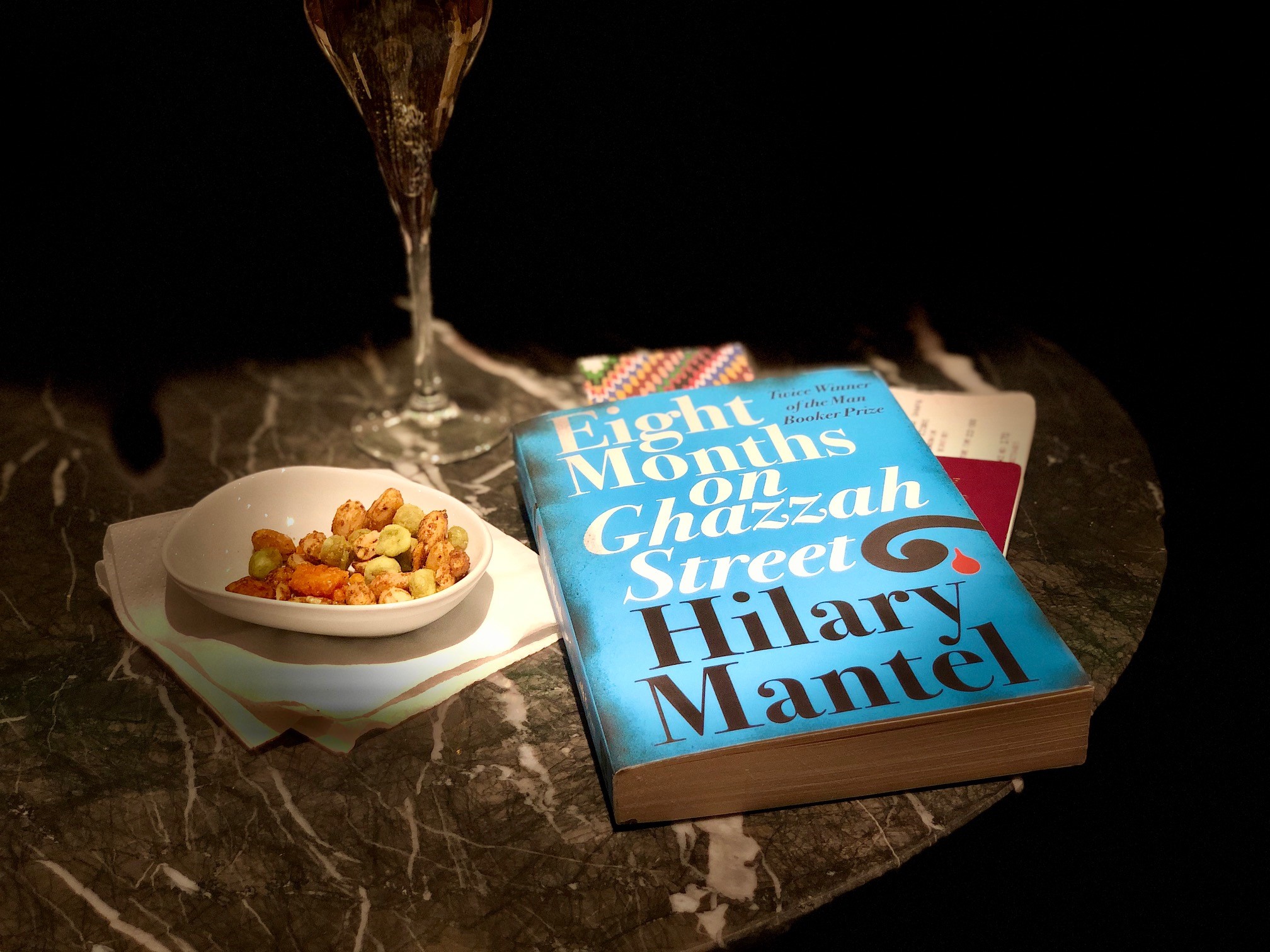
 I had recently been reading Mantel’s third novel, Eight Months on Ghazzah Street (London: Viking, 1988), which is set in Jeddah, Saudi Arabia, in 1984-85, and tells the story of Frances Shore, the unhappily married cartographer wife of a civil engineer on an expatriate work contract in the Kingdom. The novel is perhaps the best evocation of 1980s Saudi Arabia written by a woman in English, and carefully reconstructs the oppressive, punitive environment that she encounters. A mapmaker stranded in a city without signs, Frances Shore observes that pavements in Jeddah exist to stop cars crashing into buildings, and not for the benefit of pedestrians. Her large apartment on Ghazzah Street has windows with views of blank compound walls, and she can only glimpse a view of the sea by climbing to the roof. Denied the opportunity to work or drive, Frances Shore reads her way through all the detective novels she can find, while keeping a diary of her claustrophobic life and trying to reconstruct the lives of others around her. It is a compellingly atmospheric novel. 

When I recently went to Saudi Arabia for a short visit, I had to go and find Ghazzah Street, and see the place that Mantel had reimagined in her fiction for myself. Within 72 hours of setting foot in the Kingdom, I was there, and a spot of surreptitious literary detective work (and pilgrimage) had begun.  

 So here is Ghazzah Street, 9 blocks in from the sea, in Hamrah in Jeddah’s downtown, just off Shari’eh Falasteen (Palestine Street). Several of the buildings look plausible as the likely home of Frances Shore in the novel -which thinly fictionalised the first apartment Mantel actually lived in. Much has changed – Ghazzah Street now has a swanky business hotel, Palestine Street is beautifully pedestrianised, and women are allowed to drive – but parts of the built environment dating from the 1970s and 1980s are exactly as Mantel would have encountered and thinly fictionalised in the novel. In fact, Mantel spent not eight months in Jeddah, but stuck it out for four years, in three different addresses in Jeddah and one outside of the city, accompanying her geologist husband. 

Mantel hated her time in Saudi Arabia and to the best of my knowledge, has never been back. And yet, it was those four years, living in the most gender repressive society on earth, that was the crucible that forged her as a writer. She had time to write, as denied the ability to work or drive, she could do little else. Like her fictional character Frances Shore, Mantel read her way through the British Council Library’s collection of detective fiction, and similarly, kept a diary of her day to day life. She arrived as a housewife and left as a professional writer, with two novels under her belt, and the material – her Jeddah diaries – for her third, Eight Months on Ghazzah Street, ready to go. She worked through her material and wrote the novel back home in England during the winter of 1986, in a world that ‘always seemed to be dark’. Even before the novel was published, Mantel’s Jeddah material was winning awards: her first literary prize was as the first ever recipient of the Shiva Naipaul Memorial Prize for Travel Writing (1987) for a piece on Jeddah. 

 So, if you are thinking of the place that turned Hilary Mantel from a geologist’s wife into an awardwinning novelist, look to Jeddah, and not just for the inspiration for Eight Months on Ghazzah Street. Surely, there could have been no better preparation for writing about absolute male patriarchy and the divine right of kings in Tudor England than having lived in the Kingdom of Saudi Arabia? Perhaps even more ironically, Mantel now has a readership within the Kingdom: Wolf Hall and Bring up the Bodies are both openly sold and read there, as my own visit to Jarir Books, Jeddah’s largest physical and online book retailer, located just a few kilometres away from Ghazzah Street, proved. 

George Eliot’s Piano

Dr Delia da Sousa Correa, Senior Lecturer in English

22nd November 2019 marks the 200th anniversary of the birth of novelist George Eliot, born Mary Ann Evans. Appropriately 22nd November is St Cecilia’s day, in honour of the patron saint of music. Music played a particularly vital role throughout Eliot’s life and this is reflected in the musical characters and pervasive references to music in her fiction. She was a keen piano pupil who continued to play in adulthood, and she loved attending concerts. Handel’s Oratorios featured large as they did for many of her contemporaries, and so did composers such as Beethoven, Schubert and Schumann, whose work she could also play at the piano. Eliot was one of the first champions of Wagner in Britain, although she was less enthused by his music than by his ideas on dramatic unity. The Romantic repertoire was where she was most at home. With her partner, the philosopher and scientist George Henry Lewes, Eliot enjoyed opportunities to hear music in London and abroad, meeting Liszt on their first visit to Weimar together in 1854. In London, they attended both public concerts, in fashionable venues such as St James’s Hall, and private concerts where leading musicians such as the violinist Joseph Joachim and singer (later conductor) George Henschel, performed for guests. Music making was also a significant part of their own social entertainments and domestic life.

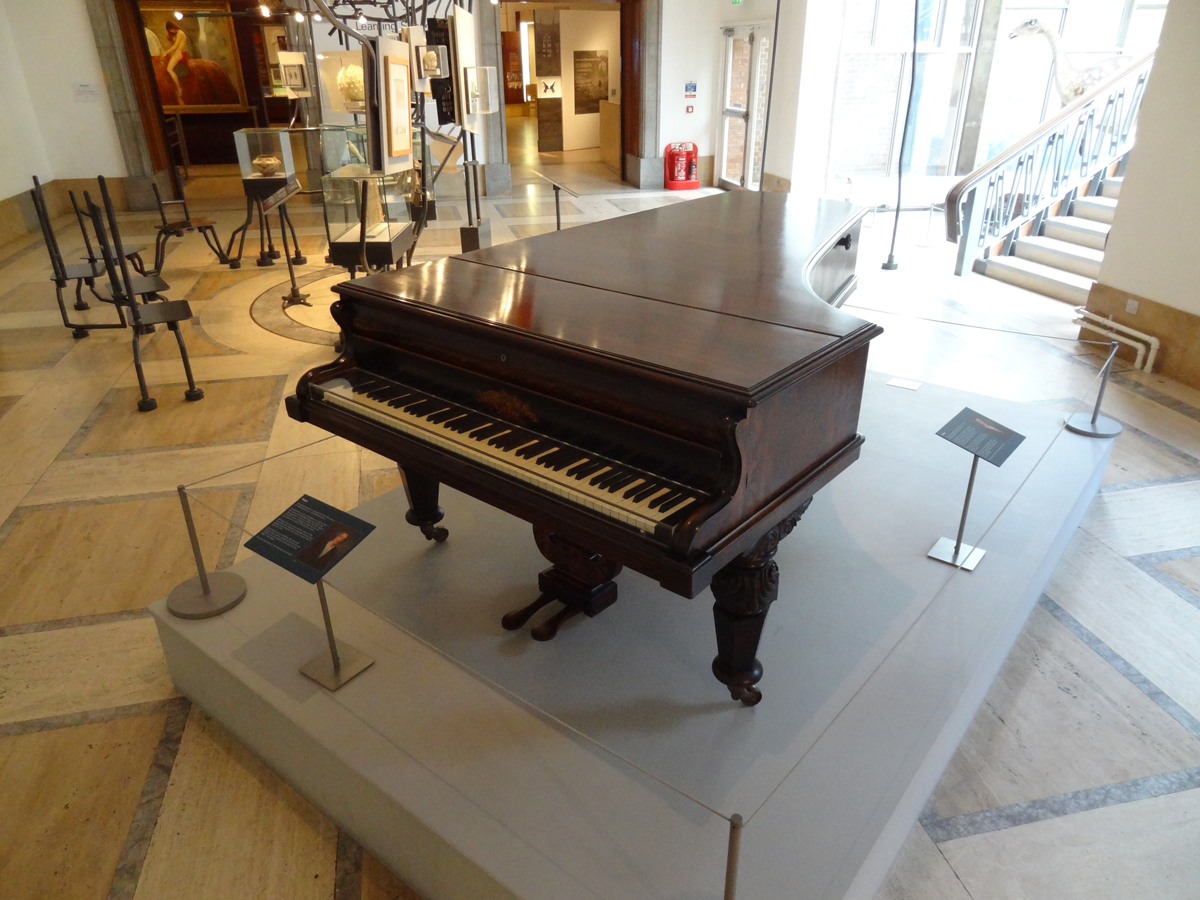
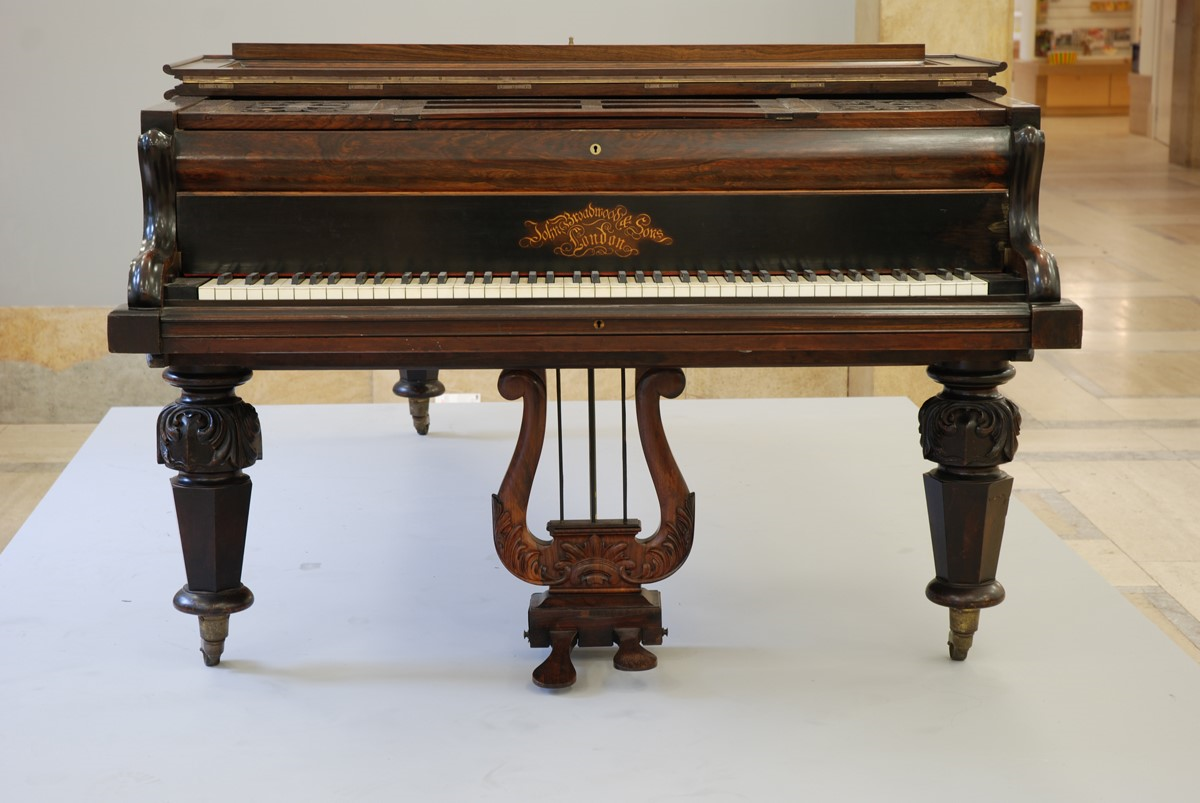
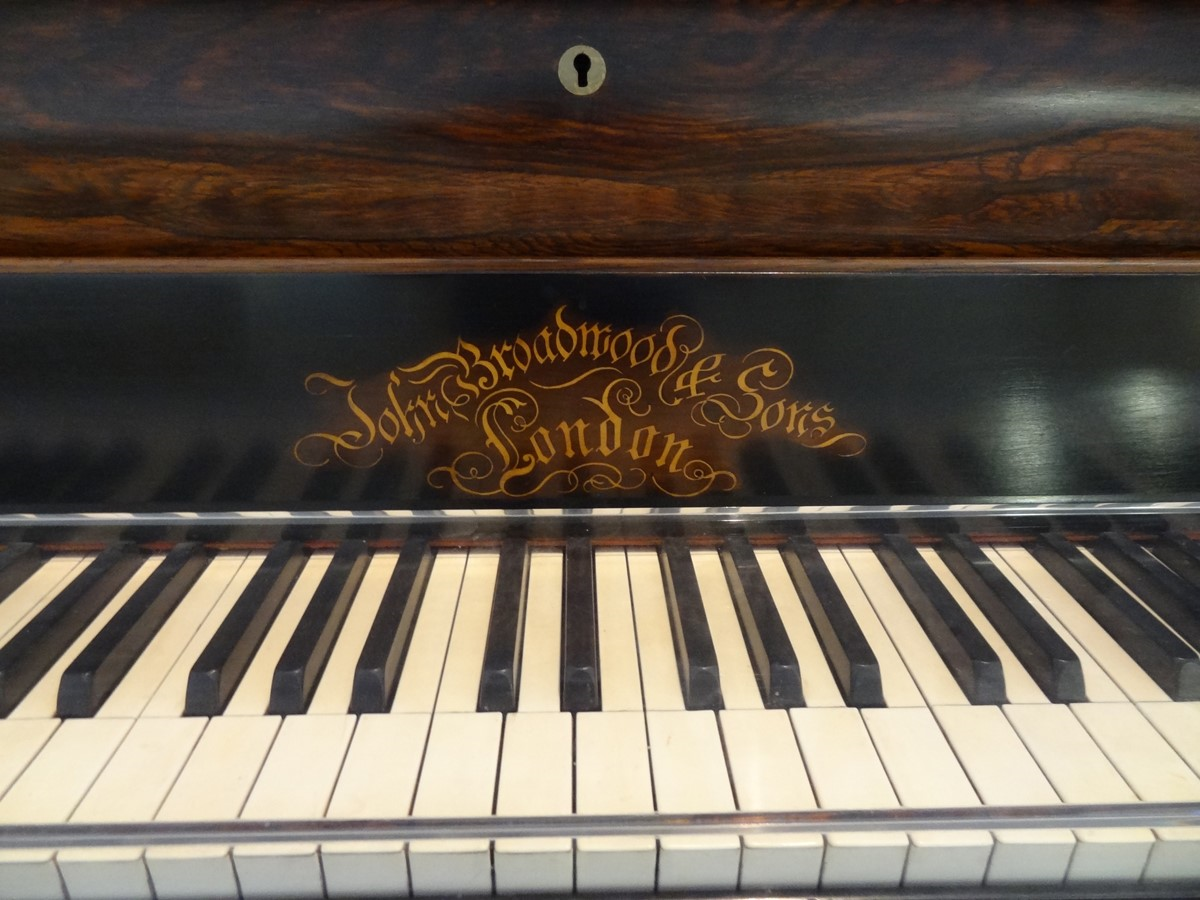
A material trace of Eliot’s passion for music remains in the form of a fine Broadwood piano, now housed at the Herbert Art Gallery & Museum, Coventry which was purchased by Lewes for Eliot’s 50th birthday. It thus became a presence in her life precisely 150 years ago on this 22nd November. Her anniversary provides a fitting opportunity for us to reflect on what this piano meant to her and what it adds to our understanding of her life and work. For us it’s also a question of what significance we invest in material relics of the past; what does Eliot’s piano, standing there in the museum, mean to us 150 years on?

On 22 November 1869, this piano was delivered to a grieving household. Lewes’s middle son, Thornfield, had returned from farming in Africa with a painful illness and had died, aged 25, just a month previously. Neither Eliot, who was writing Middlemarch, nor Lewes, were able to work. That the piano was purchased now, marks its significance. Not surprisingly, no flurry of references to the new piano fills Eliot’s correspondence at this date. Fittingly however, the piano is an implied source of solace a decade later when, on the first anniversary of Lewes’s own death, Eliot’s diary for 8 Sept 1879 reads simply: ‘Darwin. Schubert’ (Journals, 180). ‘Darwin’ may denote a visitor, or his books; Schubert she must have been playing at the piano. Eliot’s journal further records that she had ‘Touched the piano for the first time’ after Lewes’ death on 27th May (Journals, 175). However the piano, which survives in the Herbert Art Gallery and Museum, represents not just the personal importance of music for George Eliot but its significance for numerous areas of Victorian culture.

The purchase of this fine piano was possible because of Eliot’s success as a novelist, although the fact that it was acquired before the publication of Middlemarch, which made her wealthy, is a further indication of its priority. Nor was it the first Broadwood that Eliot had owned. The first, purchased in 1861, marked an early milestone in her successful career. The enthusiasm conveyed in Eliot’s letters communicates the central place a piano occupied in the Lewes’s domestic and social lives. ‘Today our new grand piano came – a great addition to our pleasures’ Eliot records in her journal for 1st October 1861 (Journals, 102). Later that month, she writes that a state of good health and spirits might be attributable to her ‘new grand piano, which tempts me to play more than I have done for years before’ (Letters, III:460). The next year she mentions being unhappy with the piano’s touch – no doubt among the reasons for subsequently replacing it (Letters, IV:30). Despite this reservation, Eliot makes repeated references over the following years to the benefits she derives from ardent and energetic practice (Letters, IV:120, 127). In 1862, the Lewes’s rearranged their entire drawing room to improve the piano’s position and sound (Letters IV:30). It became a centrepiece of social gatherings including the increasingly important Sunday salon held at The Priory, their house at 21 North Bank, Regents Park, purchased in 1863; from 1869 this will have been the place occupied by the new piano, when the Sunday salon resumed shortly after the death of Thornton Lewes for whom Eliot had frequently played during his illness. Their musical evenings were attended by an array of literary and scientific figures, including the poet Robert Browning and Herbert Spencer, founder of sociology, who would join in the singing.

The arrival of Eliot’s first Broadwood had been celebrated, on 5th October 1861, with a ‘Beethoven night’ the first of many musical evenings in which music of the Romantic period predominated (Letters, III:456). Eliot owned numerous Beethoven scores and when she acquired her first Broadwood, had been playing Beethoven duets ‘with increasing appetite every evening’ with her eldest step-son, Charles Lee Lewes (Letters, III:346). The liberal politician Frederick Lehmann (1826-1891), who visited The Priory to play Mozart and Beethoven sonatas for piano and violin with Eliot during 1866, described her as ‘a very fair pianist, not gifted, but enthusiastic, and extremely painstaking’; their audience was Lewes who would ‘groan with delight whenever we were rather successful in playing some beautiful passage’ (Letters, VIII: 385 n.7). In October 1868, Eliot wrote to Charles requesting him to buy ‘some music from your city man’; she asked Charles to choose ‘things by Schumann and Schubert, of the genre, for example, of Schumann’s Arabesque.’ (Letters, IV:478). Also I should like to have an arrangement of Verdi’s best operas for the Piano. Pater likes hearing those things’ (Letters, IV:478). Verdi was certainly not the only opera composer to be played, in piano reduction, on this new piano. In the late 1870s, when Lewes was already seriously ill, John Cross discovered him giving enthusiastic renderings of Rossini, singing ‘the great portion of the tenor part in the Barber of Seville – George Eliot playing his accompaniment, and both of them thoroughly enjoying the fun’ (Cross, III:334). The composers that Eliot played on this piano are frequently alluded to in her novels and Romantic composers in particular were a standard against which literary contemporaries were measured. In an 1856 review she wrote that ‘Turning from the ordinary literature of the day to such a writer as Browning, is like turning […] to the distinct individuality of Chopin’s Studies or Schubert’s Songs’ (Selected Essays, 350). While most details of their existence are lost to us, the wood and metal structures of this piano, that once sounded in response to Eliot’s touch, embody the meetings in music and conversation shared by the writer and her contemporaries.

Works Cited

George Eliot, The George Eliot Letters, ed. Gordon Haight, 9 vols., (Yale University Press, 1954-78). Cited as Letters.

The Journals of George Eliot., eds. Margaret Harris and Judith Johnston, (Cambridge University Press, 1998). Cited as Journals.

George Eliot’s Life: As Related in her Letters and Journals, ed. J.W. Cross, 3 vols., (Blackwood, 1885). Cited as Cross.

Selected Essays, Poems and Other Writings, ed. by A. S. Byatt and Nicholas Warren, (Penguin, 1990). Cited as Selected Essays.

Further Reading

Delia da Sousa Correa, George Eliot, Music and Victorian Culture, (Palgrave-Macmillan, 2003).

‘George Eliot, Schubert and the Cosmopolitan Music of Daniel Deronda’, The Edinburgh Companion to Literature and Music, ed. Delia da Sousa Correa, (Edinburgh University Press, 2020).

Photographs of George Eliot’s piano by kind permission of the Herbert Art Gallery & Museum, Coventry


‘The Antipodes’ by Annie Baker at the National Theatre

Alistair Daniel, PhD student and Associate Lecturer, Creative Writing

In his monumental study, The Seven Basic Plots, Christopher Booker identified the seven types of story that, he argued, recur time and again, in everything from fairy tales to Hollywood blockbusters. Booker’s is one of several well-known storytelling theories that make fleeting, uncredited appearances in The Antipodes, the new play by the Pulitzer Prize-winning American playwright Annie Baker, currently making its UK debut at the National Theatre in a production co-directed by Baker herself. An enigmatic, elusive exploration of storytelling, The Antipodes is set in an anonymous boardroom where six writers are attempting to develop some kind of epic new show about monsters. The writers have been hired by a legendary showrunner called Sandy (played, in a piece of inspired casting, by Conleth Hill from Game of Thrones) and their job, Sandy explains, is to tell each other stories – any stories – until something leaps out.

Annie Baker

The writers take to their task with relish, telling stories about everything from childhood traumas to their greatest failures, tossing out monster ideas and crackpot theories of time. In Booker’s mythic terms, they are on a quest, albeit a very modern sort of quest in which no leaves the room, where boxes of Evian are stockpiled as if anticipating the kind of apocalyptic weather event that does, in fact, arrive.

It is never clear what the writers think they are doing, or how Sandy expects this process to result in a new work of art. As a method of creation it’s a bit like running a writing workshop in which everyone types out their favourite story until inspiration strikes. Which is not quite as mad as it sounds. The novelist Joseph O’Connor learned to write by obsessively copying John McGahern’s ‘Sierra Leone’ in longhand, gradually altering, reshaping and rewriting until he’d made it his own. In a storytelling landscape heavily populated by screenwriting ‘gurus’ who, as John Yorke puts it in Into the Woods, insist that ‘there must be an inciting incident on page 12’ (Yorke, p. xii) but can’t explain why, Sandy’s method may be as good as any other.

Besides, some things bode well. Some of the writers have been through Sandy’s ‘process’ before, with apparent success. One of them is part Icelandic, which seems promising to a room full of writers in search of the epic, and then there’s Adam, who is at least named after a character in one of the most famous stories of all. And yet, suffice it to say, things do not go to plan. As the writers reel off anecdotes – funny, strange and banal – eat, doze, and bicker over how many stories types there are (Booker’s seven, or George Polti’s 36?), the chances of Sandy’s monster show going into pre-production begin to look increasingly remote.

Any play about storytelling will inevitably be judged by its own ability to tell a story, and in this respect, The Antipodes doesn’t quite deliver in its season finale. Baker’s frame of reference is dizzyingly broad. As a story about a group of strangers trapped in a room, telling stories, The Antipodes nods to everything from The Decameron to Samuel Beckett’s Waiting for Godot – where Godot is both the studio boss (Max) who will either green light Sandy’s project or pull the plug, and inspiration itself. Perhaps it’s a version of Sartre’s No Exit, in which hell is listening to your colleague crack boiled eggs on the table and eat them (an allusion, perhaps, to the Chinese creation myth printed in the programme notes). But The Antipodes is also more than that. It’s a satire about writers who never do any writing (some readers may wince), about screenwriting psychobabble and the money pits behind television’s much-vaunted ‘golden age’. And it’s a play about gender politics in the #MeToo era, in which Eleanor, the only female writer in the room, is subjected to insidious forms of aggression from her (faintly monstrous) male peers. It’s about all these things, but above all it’s a play about the business of creation – what fuels it, where it comes from, and how it works.

Baker is far too interesting a writer to answer the questions she raises, or conform to screenwriting diktats about story shape, but as the play progresses the rich stew of ideas comes to feel a little undercooked. Tensions within the group never quite come to the boil, plot threads are picked up and discarded, as if Baker is dramatising her own struggles with creation, and while, in the end, we do get crisis, climax and resolution (John Yorke would approve), what any of it might mean remains frustratingly out of reach. But perhaps it’s fitting that a play (at least in part) about creative failure might itself stop just short of success.

The Antipodes runs at the National Theatre until 23 November

Booker, C. (2004), The Seven Basic Plots: Why We Tell Stories London: Continuum

Yorke, J. (2013), Into the Woods: How Stories Work and Why We Tell Them London: Penguin